Furniture
Monumental rootwood throne chair with burl mosaic seat
Chinese, late Qing dynasty
$39,949.09Our direct price. The same piece costs more on the marketplaces.
Available. Request it at this price, or ask us anything first.
About this piece
This Chinese rootwood throne chair stands 48 inches tall, with a seat of end-grain burl rounds set in black lacquer putty. It is a chair you walk around before you sit down. In the late Ming, Wen Zhenheng wrote that a meditation chair should be made of Tiantai cane or gnarled roots "to resemble a writhing dragon"; the heavy burl arms here evoke that wish.
The form is a full armchair of naturally twisted roots, not a single carved block, with a high back inside a twisted surround, arms that roll forward, and paw-form feet of clustered burl knobs. Makers chose roots that nature had already shaped, and fitted them together. Show surfaces have been recently oiled.
Circular end-grain burl rounds are fitted edge to edge and bedded in black lacquer putty, with age cracks along the growth rings. They sit on a two-board plank seat on three nailed battens. Hand-forged iron nails hold the battens. The roots are pegged and fitted. A squared tenon block and round wood ends meet the seat rail, the roots scribed to that rail. In the center of the back, the maker arranged these roots into a squared grid of uprights and cross-bars, with a peg through one horizontal, that can be read as a stylized shou (寿), the character for longevity. That is our reading, not a certainty. The arm terminals are heavy burls evoking dragon heads, with no carved eyes or scales.
How we dated it. Four construction clues support the attribution. No one clue dates the chair.
1. A two-board plank seat on three nailed battens, with shrinkage gaps and a dry grey underside.
2. Lacquer-set end-grain burl rounds, with age cracking along the rings.
3. Pegged and fitted root joinery, including a squared tenon block.
4. Hand-forged iron nails on the seat battens, with hammer marks radiating from the head and notched, irregular outlines.
The nails alone can't date the chair; they only show the earliest it could have been made.
The chair is attributed to the late Qing dynasty, late 19th century.
What we don't know: who made it or where. There is no documented provenance or certificate of authenticity, and the wood species has not been tested.
Living with it. At 48 inches tall, it anchors an entry hall, a library corner or the end of a long room, and it reads as sculpture from across the room. Up close, the oiled roots show their grain and the burl rounds show their growth rings.
Condition is good for its age, with a few age splits in the roots. Please see photographs.
Dimensions: 37 W x 31 D x 48 H in., seat 22 W x 20 D in., seat height 18.5 in., arm height 33 in.
- Dimensions
- 37 W x 31 D x 48 H in., seat 22 W x 20 D in., seat height 18.5 in., arm height 33 in
- Price
- $39,949.09
- Location
- Brookeville, Maryland
- Delivery
- Free white-glove delivery, continental US
- Payment
- Card or US bank account
Also in furniture
See all-
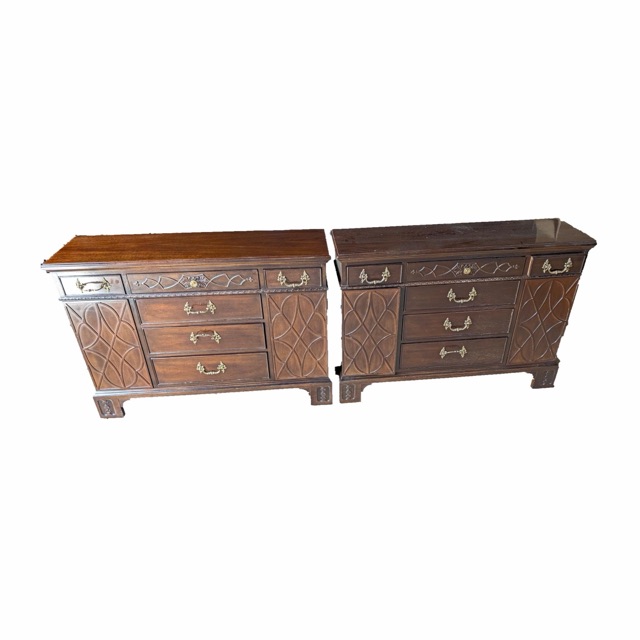
Pair of Henredon Chippendale-style fretwork chests
Mahogany, 1980s, 42 in.
$4,924.40
-
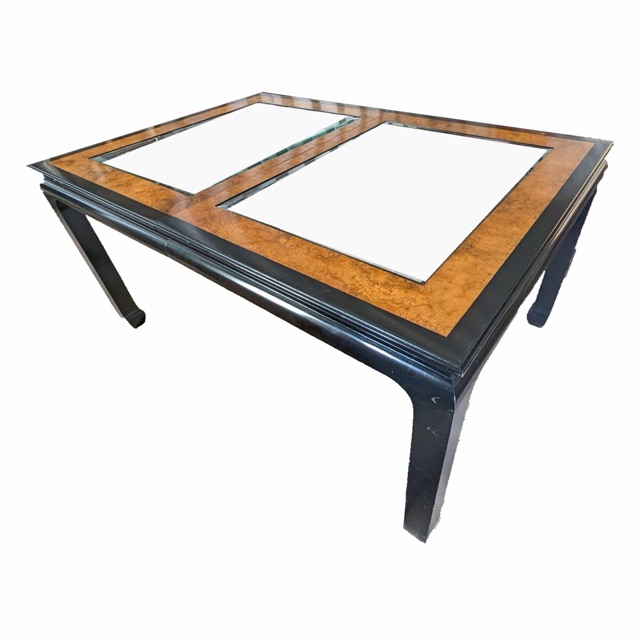
Century Furniture Chin Hua dining table
Designed by Raymond K. Sobota, black lacquer and burl
$4,702.50
-
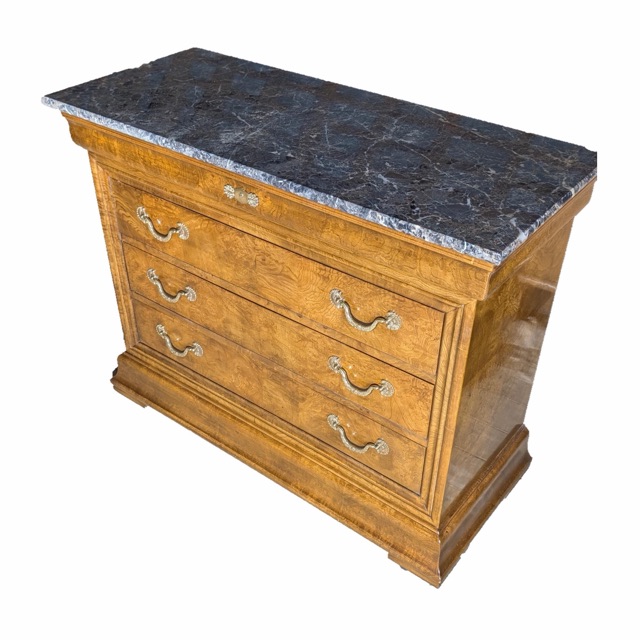
Henredon Charles X-style chest of drawers
Burl wood with marble top, 44 in.
$3,314.50
-
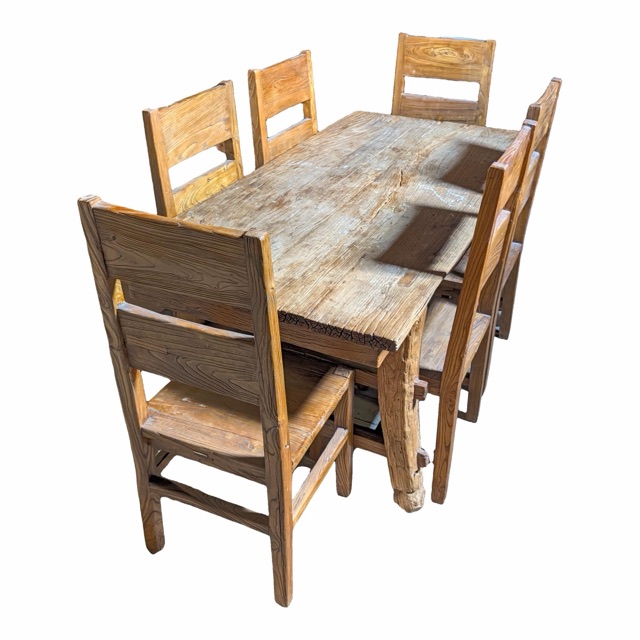
Church-door trestle dining table with six ladder-back chairs
Reclaimed oak, late 20th century
$2,137.50
Ask about this piece
We reply to every message personally, usually the same day.
Emailinquiries@ashcombeandvane.com
ViewingBy appointment, Brookeville, Maryland
Video walk-throughsOn request, for any piece